Learn proven strategies to meet tight desktop publishing deadlines while maintaining quality standards across multilingual projects.
Jan 8, 2026
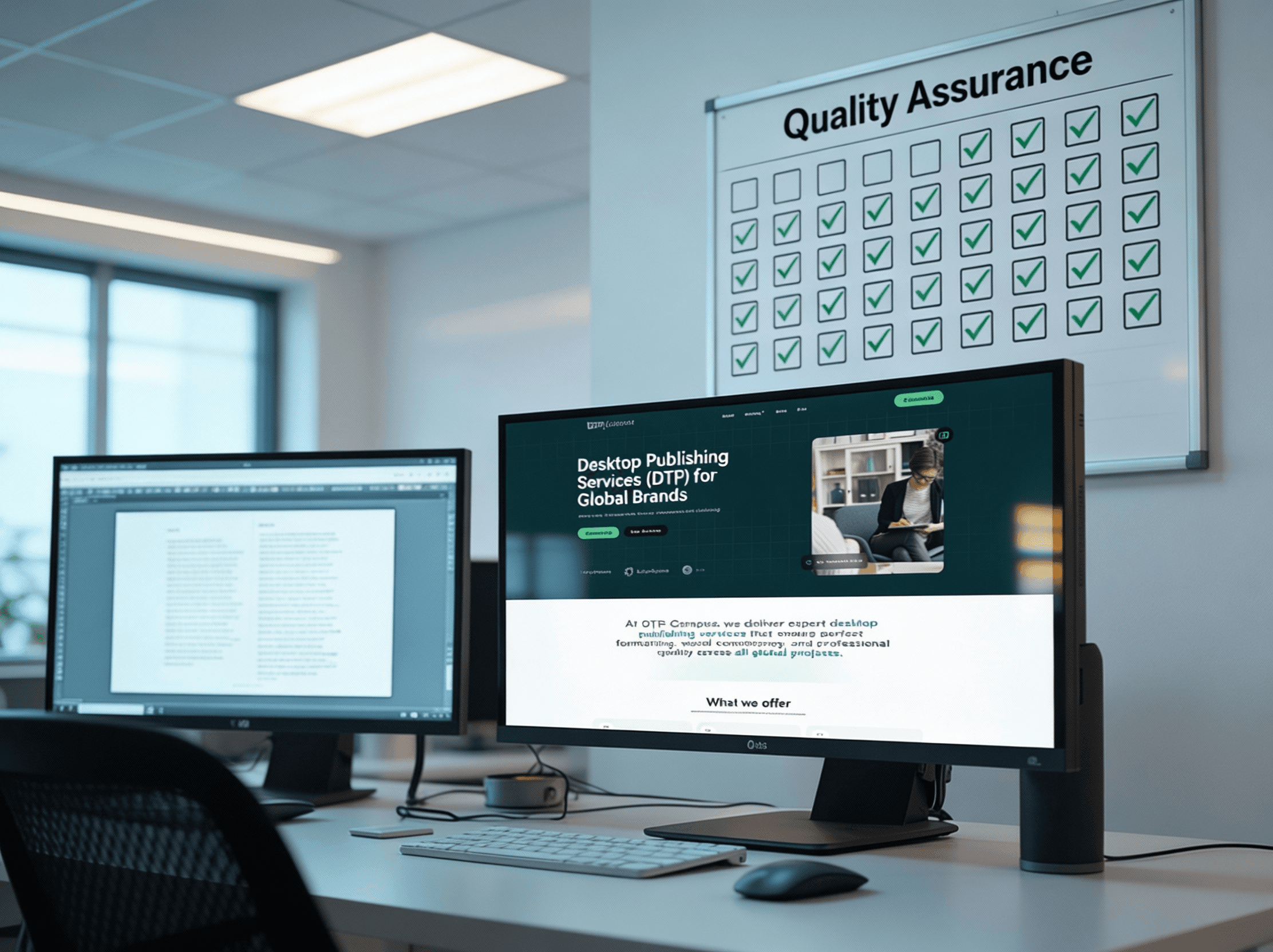
In the world of global publishing, deadlines are not suggestions. Product launches, regulatory submissions, marketing campaigns, and trade shows operate on fixed schedules that cannot be moved. When your desktop publishing project is running behind, the pressure to cut corners becomes intense.
Yet compromising on quality is never the answer. A rushed document with formatting errors, broken layouts, or inconsistent branding damages your reputation far more than a delayed launch ever could. The real challenge is building systems that deliver both speed and excellence simultaneously.
This guide breaks down the practical strategies that professional DTP service providers use to meet impossible deadlines without sacrificing the quality your brand demands.
Why Deadline Pressure Creates Quality Risks
Before solving the problem, it helps to understand why tight timelines create quality issues in the first place.
Desktop publishing involves dozens of interdependent tasks: file conversion, layout design, typography adjustments, image optimization, translation integration, and quality checks. Each step depends on the previous one being completed correctly. When time compresses, teams often skip verification steps or rush through complex adjustments.
According to the Project Management Institute, schedule pressure is among the top causes of project failure across industries. In publishing specifically, compressed timelines lead to:
Layout inconsistencies across language versions
Typography errors in complex scripts
Missing or corrupted images
Brand guideline violations
Regulatory compliance failures
The solution is not working faster. It is working smarter through optimized workflows, strategic resource allocation, and proactive planning.
Strategy 1: Invest in Proper File Preparation Upfront
The single biggest time-saver in any DTP workflow is proper Data & File Preparation before production begins.
Many projects lose days to preventable problems:
Missing fonts that must be sourced or substituted
Low-resolution images that require replacement
Corrupted files that need reconstruction
Incompatible formats that demand conversion
A thorough file preparation phase catches these issues before they derail your timeline. Professional DTP teams audit every incoming file for completeness, checking fonts, links, color profiles, and structural integrity.
The time investment pays dividends. Spending four hours on preparation can save forty hours of emergency fixes during production.
Strategy 2: Build Reusable Template Systems
Custom layouts for every project are beautiful but inefficient. When deadlines are tight, template-based production dramatically accelerates output without compromising design quality.
Smart Template & Stylesheet Design creates reusable frameworks that accommodate:
Variable text lengths across languages
Bidirectional script requirements
Consistent brand typography and color systems
Flexible image placement zones
Automated style inheritance
With a well-designed template, a skilled typesetter can produce a new language version in hours rather than days. The template handles structural decisions automatically, freeing the team to focus on refinement and quality control.
Strategy 3: Parallel Processing Across Languages
Sequential production, where one language is completed before starting the next, is the enemy of tight deadlines. Parallel multilingual processing transforms project timelines.
Here is how parallel workflows operate:
Sequential Approach | Parallel Approach |
|---|---|
English completed then French started then German started | English, French, German produced simultaneously |
3 weeks for 3 languages | 1 week for 3 languages |
Single team bottleneck | Multiple specialized teams |
At DTP Campus, our Multilingual & Bidirectional Typesetting services leverage teams across time zones, enabling 24-hour production cycles. While one team sleeps, another continues progress.
This approach requires excellent coordination and standardized processes, but the timeline compression is substantial.
Strategy 4: Integrate Quality Assurance Into Every Stage
The traditional approach treats quality assurance as a final gate before delivery. When deadlines compress, this final QA phase gets squeezed or eliminated entirely.
A better model integrates Quality Assurance checkpoints throughout production:
Pre-production QA: Verify source files, fonts, and specifications
Mid-production QA: Check completed sections before proceeding
Pre-delivery QA: Final comprehensive review
This distributed approach catches errors early when fixes are quick and inexpensive. Finding a font problem on page 3 of a 200-page document is far easier before pages 4 through 200 are completed.
The American Society for Quality emphasizes that quality built into processes consistently outperforms quality inspected at the end. This principle applies directly to document production workflows.
Strategy 5: Leverage Technology Intelligently
Modern DTP technology offers powerful acceleration tools when used correctly:
OCR Technology
When source materials exist only as scanned documents or PDFs, OCR Conversion extracts editable text quickly. Advanced OCR preserves formatting structure, reducing manual reconstruction time significantly.
Automated Preflight Checks
Software tools can automatically scan documents for common problems: missing fonts, low-resolution images, color space issues, and bleed violations. Running automated checks before manual review focuses human attention on issues that require judgment.
Translation Memory Integration
For Localization & Translation Integration projects, translation memory systems accelerate content processing by reusing previously translated segments. This reduces both translation time and typesetting corrections.
Asset Management Systems
Centralized digital asset management ensures teams always access the correct, approved versions of images, logos, and brand elements. Searching for the right file wastes precious hours on deadline-driven projects.
Strategy 6: Establish Clear Communication Protocols
Deadline failures often stem from communication breakdowns rather than technical problems. Establishing clear protocols prevents costly confusion:
Single source of truth: One shared project management system where all stakeholders access current status
Defined decision authority: Clear identification of who approves changes and how quickly
Escalation pathways: Predetermined routes for resolving blockers immediately
Daily standups: Brief check-ins during critical phases to surface issues early
According to Harvard Business Review, effective communication is the strongest predictor of project success, more important than budget, timeline, or technical expertise.
Strategy 7: Plan for the Unexpected
Every experienced DTP project manager knows that surprises are guaranteed. Building contingency into your timeline protects quality when problems arise.
Practical contingency strategies include:
Scheduling delivery 24-48 hours before the actual deadline
Identifying backup resources who can be activated quickly
Pre-negotiating rush fees with vendors for emergency support
Creating simplified fallback designs for worst-case scenarios
The goal is not pessimism but preparedness. When contingency time exists, unexpected issues become manageable problems rather than quality-destroying crises.
Strategy 8: Choose the Right Partners
Internal teams have capacity limits. When deadline pressure exceeds internal capabilities, the right external partner makes the difference between success and failure.
Professional Design & Layout Production partners offer:
Scalable capacity that flexes with project demands
Specialized expertise in complex requirements
Established workflows optimized for speed
Round-the-clock coverage across global time zones
Quality systems refined through thousands of projects
The key is establishing partnerships before emergencies arise. Onboarding a new vendor during a crisis adds friction exactly when you need smooth execution.
Industry-Specific Deadline Challenges
Different industries face unique deadline pressures that require specialized expertise.
In Healthcare & Pharmaceuticals, regulatory submission windows are non-negotiable. Patient information leaflets, clinical documentation, and packaging materials must meet strict formatting standards while hitting agency review deadlines. A single compliance error can delay market entry by months.
For Manufacturing & Engineering, product launch schedules drive technical documentation timelines. Equipment manuals, safety guides, and installation instructions must be ready when products ship, often across dozens of language markets simultaneously.
Understanding these industry-specific requirements allows DTP teams to anticipate challenges and build appropriate safeguards into project timelines.
Common Mistakes That Destroy Deadlines
Even experienced teams fall into traps that sabotage their timelines. Recognizing these patterns helps you avoid them:
Underestimating text expansion: German text expands up to 35% compared to English. Failing to account for this causes last-minute layout emergencies across every affected page.
Skipping style standardization: When multiple designers work without unified stylesheets, inconsistencies multiply and require extensive correction cycles.
Delaying stakeholder reviews: Waiting until final stages for client approval creates bottlenecks when changes cascade through completed work.
Ignoring version control: Without clear file naming and tracking, teams waste hours identifying the correct source files or accidentally overwrite completed work.
Awareness of these pitfalls enables proactive prevention rather than reactive firefighting.
The Real Secret: Systematic Excellence
Meeting tight DTP deadlines without sacrificing quality is not about heroic individual effort. It is about systematic processes that produce consistent results regardless of timeline pressure.
The strategies outlined here, from file preparation to template systems to parallel processing, represent professional workflows refined through countless high-pressure projects. Each element reduces risk and accelerates delivery.
Organizations that invest in these systems discover something counterintuitive: well-designed workflows actually become faster under pressure because every team member knows exactly what to do and how to do it.

Partner with Experts for Deadline-Driven DTP Excellence
When your next project faces an impossible timeline, you need more than promises. You need proven systems, experienced teams, and workflows designed for exactly this challenge.
At DTP Campus, we specialize in delivering multilingual desktop publishing projects on demanding schedules without compromising the quality your brand requires.
Your deadlines do not wait. Neither do we.
